

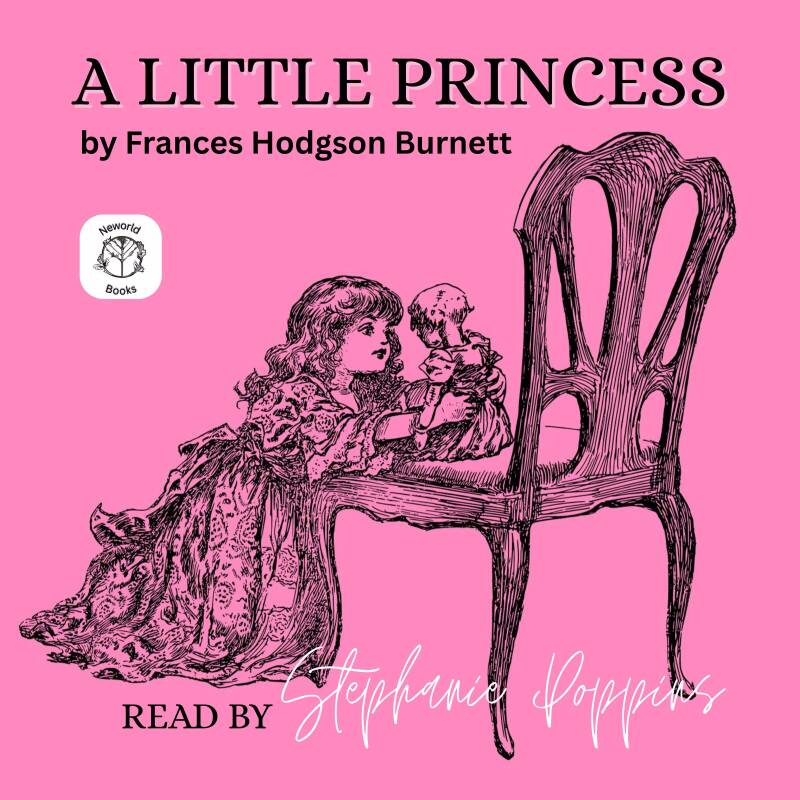
Sample the Audiobook performed by Stephanie Poppins
"I am a Little Princess" - What Sarah Crewe Can Teach Us About Stoic Resilience
There's a moment in A Little Princess where a child who has lost everything — her father, her fortune, her status — stands in a freezing attic and says quietly to herself: "I have to remind myself that I am a little Princess. Daddy told me I was and I am." It's one line, but it contains an entire philosophy of resilience. And it's exactly why this Edwardian classic deserves a place next to Marcus Aurelius and Epictetus on your shelf.
A Riches-to-Rags-to-Riches Story with a Stoic Core
Frances Hodgson Burnett's A Little Princess (1905) follows Sarah Crewe, a wealthy, bright, imaginative child sent from India to a select London seminary while her father returns for work. She begins the story at the top — clever, adored, treated as a "little princess" by the headmistress herself. Then the call to action arrives: her father dies, penniless, and Sarah is stripped of everything overnight. She's relegated to the attic, sleeping alongside the scullery maid, at the mercy of a headmistress who suddenly has every incentive to control her.
It's a dramatic setup, but it maps almost perfectly onto Stoic philosophy — and that's no coincidence. The themes running through Sarah's story are the same ones Marcus Aurelius wrestled with as an emperor forced to be a pragmatic, composed problem-solver under constant pressure.
The Power of the Pause
What makes Sarah remarkable isn't that she never suffers — she suffers enormously. What makes her remarkable is how she responds. Rather than reacting outwardly to the headmistress's cruelty, Sarah creates distance. She detaches, retreats into an inner world where she can process her feelings safely — often speaking to her doll as a way of externalising emotion without handing her antagonist the satisfaction of a visible reaction.
This is quiet resilience as pushback. Not silence as submission, but silence as strategy. As the podcast puts it: if someone is attacking us, creating a pause — refusing to hand over our reactivity — is itself a form of resistance. It's less obvious than shouting back, which is exactly what makes it powerful.
The Dichotomy of Control, Age Nine
Sarah instinctively grasps something the Stoics spent centuries formalising: the dichotomy of control. She cannot bring her father back. She cannot change the headmistress's animosity. She cannot alter her circumstances. But she can control her reaction to all of it — and that becomes the one territory she refuses to surrender.
This is where the book pushes back against a common misreading of Stoicism — the idea that controlling your emotions means suppressing or silencing yourself. Sarah isn't hollow or repressed. She's warm, generous, and kind throughout her ordeal. She shares her gift for imagination with the poor girl in the attic beside her, choosing carefully where to place her trust. Her composure isn't the absence of feeling — it's the protection of her values despite feeling.
"It Is a Great Deal More of a Triumph to Be One All the Time When Nobody Knows It"
Perhaps the most quietly devastating line in the book is Sarah's own reflection on her situation:
"Whatever comes cannot alter one thing. If I am a princess in rags and tatters, I can be a princess inside... it is a great deal more of a triumph to be one all the time when nobody knows it."
That's the whole of Stoic virtue ethics distilled into a children's novel: character isn't what other people see or reward. It's what you protect when no one is watching and nothing external validates it.
Reactivity Equals Weakness
The lesson Sarah's story reaffirms, again and again, is simple but hard to live: the more reactive we are, the less control — and the less power — we actually have. None of us will avoid reactivity entirely. But the aim, as with any Stoic practice, is to notice it, temper it, and get a little stronger at mastering it each day.
Your Journal Task
As Epictetus and Marcus Aurelius found sanctuary in their own minds, so did Sarah in her attic — turning a freezing room into a private Bastille, a safe haven she alone controlled. This week, try journaling on a time you were physically or circumstantially compromised, and consider: how might you have reinforced your own inner citadel in that moment? What would your imagined "safe haven" have looked like?
Listen to the Story Yourself
If you'd like to experience A Little Princess the way it was meant to be heard, the newly remastered audiobook edition, narrated by Stephanie Poppins, is available now — find it wherever you listen to audiobooks, or as guided tracks on the Insight Timer meditation app. It's also part of the growing literature-and-philosophy collection at Neworld Books, alongside Austen, Alcott, and the Stoic classics that inspired this reading.
Pick it up, or press play — and let Sarah Crewe remind you that the walls of your inner citadel are yours to keep high, no matter what the world takes from you.
#FemaleStoicPodcast #ALittlePrincess #FrancesHodgsonBurnett #SarahCrewe #Stoicism #StoicPhilosophy #InnerCitadel #DichotomyOfControl #NeworldBooks #StephaniePoppinsAudiobooks #Audiobooks #WomenInLiterature #ClassicLiterature #Resilience #BookLovers #LiteraryStoicism #MarcusAurelius #Epictetus #EdwardianFiction #BookTok
Add comment
Comments